
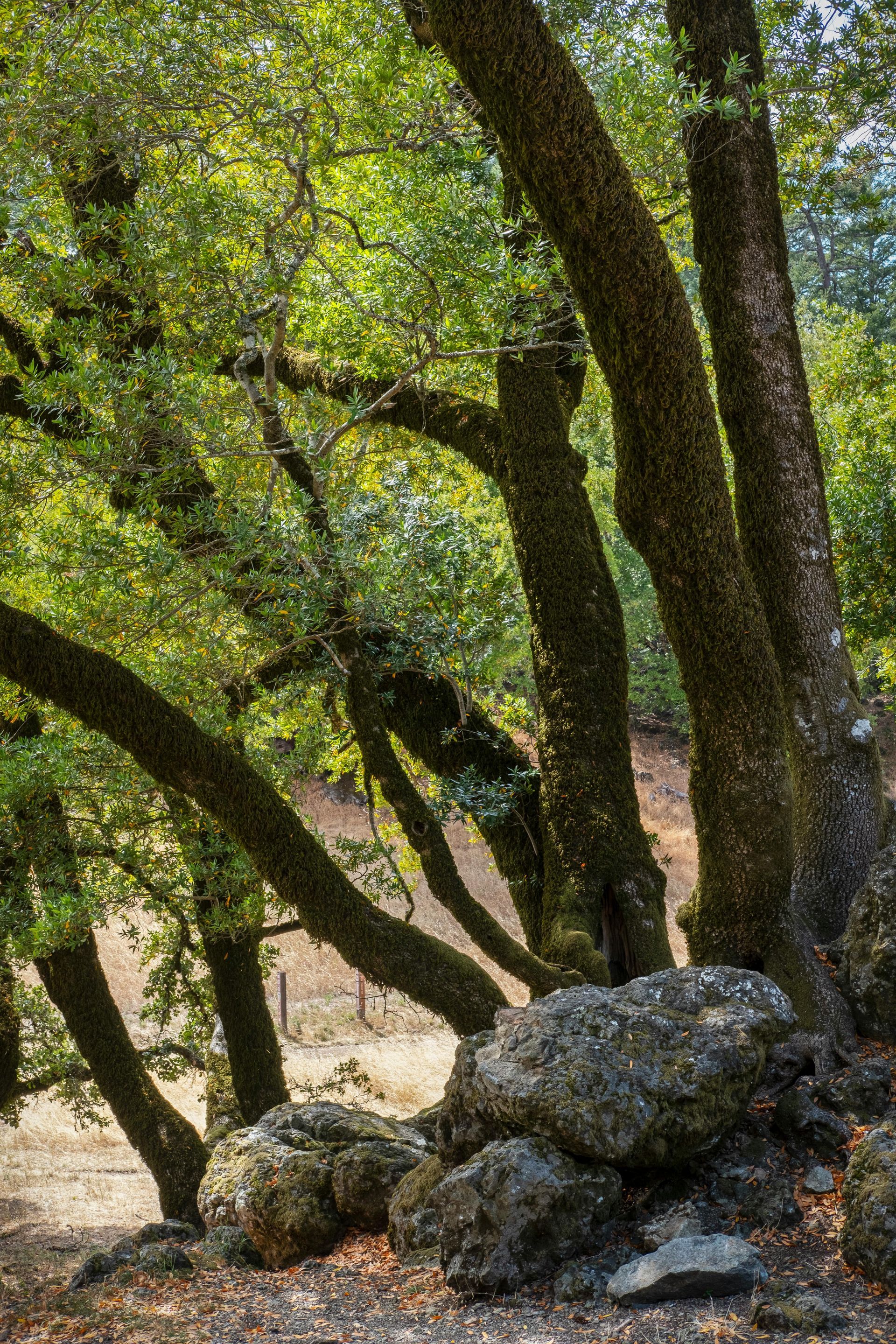
Benefits of Track Mulching for Eco-Friendly Land Clearing

February 25, 2026

Share this article

As landowners across Central Texas look for smarter ways to manage overgrown property, track mulching has become one of the most effective and environmentally friendly land clearing methods available.


Whether you’re preparing a homesite, improving pasture, or reclaiming wooded acreage, track mulching offers a streamlined solution that clears land while protecting soil health and minimizing environmental impact.


What Is Track Mulching?


Track mulching (often called forestry mulching) uses a specialized machine equipped with a rotating drum that grinds brush, small trees, and vegetation into mulch. Instead of hauling debris away or burning it, the organic material is processed on-site and left as a protective ground layer.


This approach transforms traditional land clearing into a more sustainable process, reducing waste, protecting ecosystems, and improving long-term land usability.


Improves Soil Health Naturally


One of the biggest environmental advantages of track mulching is its ability to enhance soil health. The mulch created during the process acts as a natural ground cover that:


  • Returns organic nutrients to the soil
  • Retains moisture during hot Texas summers
  • Reduces soil compaction from heavy equipment
  • Encourages beneficial microbial activity


Over time, this nutrient-rich layer decomposes, improving soil structure and fertility, a major benefit for pasture development, landscaping, and future planting.


Reduces Erosion and Runoff


Bare soil is highly vulnerable to erosion, especially in areas prone to heavy rain or sloped terrain. Track mulching helps prevent this by leaving behind a protective mulch blanket that stabilizes the ground.


This natural barrier:


  • Slows water runoff
  • Minimizes sediment displacement
  • Protects nearby waterways
  • Helps maintain property grading


For Central Texas landowners dealing with clay soils or drainage challenges, this erosion control can make a significant difference in preserving land quality after clearing.


Eliminates the Need for Burning or Hauling Debris


Traditional land clearing often involves piling brush, transporting debris, or burning vegetation — all of which can be costly, time-consuming, and environmentally harmful. Track mulching removes these steps entirely.


Because vegetation is processed on-site:


  • Fewer truckloads leave the property
  • Air pollution from burning is avoided
  • Landfills aren’t burdened with organic waste
  • Project timelines are shorter


This efficiency not only benefits the environment but also reduces overall project disruption.


Minimizes Disturbance to Surrounding Land


Track mulchers are designed to work with precision, allowing operators to selectively clear vegetation without disturbing desirable trees or nearby features. The machines also use tracked undercarriages, which distribute weight more evenly and reduce ground damage compared to wheeled equipment.


As a result, track mulching:


  • Preserves root systems of remaining trees
  • Protects wildlife habitats
  • Prevents unnecessary soil disturbance
  • Allows for targeted clearing instead of mass removal


This selective approach is especially valuable for property owners aiming to balance land improvement with conservation.


Promotes Faster Land Recovery


Because the soil remains largely undisturbed and protected by mulch, cleared areas recover more quickly than with traditional clearing methods. The mulch layer helps regulate temperature, retain moisture, and suppress invasive weed growth, all of which support healthier vegetation regrowth where desired.


For ranchers and agricultural property owners, this can mean faster pasture establishment and improved grazing conditions.


Cost-Effective and Efficient


Eco-friendly solutions are often assumed to be more expensive, but track mulching is frequently more cost-effective than conventional clearing. With fewer steps involved — no debris hauling, burning, or extensive cleanup — projects can be completed faster with lower labor and disposal costs.


Additionally, the long-term soil and erosion benefits can reduce future land maintenance expenses.


A Smarter Way to Clear Land


If you’re looking for an efficient and environmentally responsible way to reclaim overgrown land, track mulching may be the perfect solution. The team at Micro Dirt Land Services has the equipment and experience to handle projects of all sizes while protecting the health of your property.


Contact us today to discuss your project or request a quote — and take the first step toward a cleaner, more usable piece of land.

Recent Posts

June 30, 2026
Tree work seems like one of the simpler parts of land clearing. A tree is dead, damaged, in the way, crowding a fence line, blocking access, or sitting exactly where something needs to be built. So you cut it, trim it, haul it off, and move on to the next task. Except in Texas. Especially when oaks are involved, timing matters. A lot. Oak wilt is one of those property problems that doesn't look dramatic at first because the risky moment isn't loud like the tree falling or the roar of the chainsaw. It’s not even the cut itself, but what that fresh cut can invite. The Texas A&M Forest Service warns landowners to avoid pruning or wounding oak trees from February through June because that is when the insects that spread oak wilt are especially active. Fresh wounds on oak trees attract sap-feeding beetles, which carry the oak wilt fungus from infected trees to healthy ones. No matter the season, the guideline is clear: oak wounds should be painted immediately. That makes oak work fundamentally different from ordinary brush cleanup. It’s not just a matter of, "Can we cut this?" but rather, "Should we cut this right now ?" The Problem Is the Open Wound Oak wilt spreads in more than one way, but the part that matters most for land clearing is pretty simple: fresh wounds create an opening. When an oak is pruned, scraped, broken, or cut, that exposed tissue becomes an immediate entry point. The beetles are naturally attracted to the scent of fresh sap . If they have picked up fungal spores from a nearby infected tree, they can deposit those spores directly onto a healthy oak. The Texas Oak Wilt Partnership notes that all pruning cuts and other wounds on oaks should be painted immediately, regardless of the season, and that wounding oaks should be strictly avoided from February 1 through June 30. That is the biological reality many property don't consider, thinking about tree work as a purely physical job. Remove the limb. Clear the cedar. Open the fence line. Get the equipment through. Make the land usable. But biologically, the tree doesn’t care about what your project goals were. A wound is a wound, and once it exists, the riskiest part of the job might not be the heavy clearing you finished, but the damage you left behind. It’s Not Just Your Tree Oak wilt is frustrating because it turns one property decision into a neighborhood problem. That’s what makes it different from a normal tree failure. If a dead tree falls on your fence, that’s bad. If a tree is blocking your driveway, that’s annoying. But oak wilt can move through interconnected root systems and spread rapidly across property lines, especially in areas with dense clusters of live oaks. A careless cut on one lot can easily become a problem that shows up later next door. That delay is part of what makes it feel so random. Someone clears land in March, and everything looks fine. Then months later, the trees begin to decline. Leaves get discolored. A tree that looked perfectly healthy starts failing. It might be on your property, or maybe it’s part of a larger stand down the road. It may feel like the trees just suddenly got sick, but the setup happened much earlier, during a routine cut, trim, or scrape that seemed completely harmless at the time. Preventing oak wilt is less about panic and more about discipline. Don't cut oaks during the high-risk season . If work has to happen, paint wounds immediately. Be careful with equipment around trunks and roots, and be cautious about moving potentially infected wood debris. Land Clearing Is Still Necessary Obviously, this doesn’t mean nobody should touch a tree for five months out of the year. Land still has to be managed. Storm damage still has to be cleaned up. Dangerous limbs still have to come down, and access roads still have to be opened. But oak wilt changes the calculation. It means the timing, the method, and the cleanup matter just as much as the clearing itself. Because in Texas, cutting trees is also a timing decision. And if oaks are involved, sometimes the smartest cut is the one you wait to make.
Sparse young trees and brush in a dry field at sunset
May 26, 2026
Texas brush clearing is becoming a wildfire safety issue. Learn how ladder fuels, defensible space, and 2026 mitigation grants can help protect rural properties.

A dark-colored Jeep drives through a flooded road, creating a splash as it moves across the water.
March 25, 2026
Clearing even one acre can dramatically change how water moves. Learn how land clearing increases runoff, overwhelms drainage, and leads to unexpected flooding.
Tree stump in a field, with a body of water in the background.
March 18, 2026
Learn the average cost of stump removal in Central Texas, including pricing by size, factors that affect cost, and what homeowners can expect when budgeting for stump grinding.
Yellow Hyundai excavator working in a rocky quarry under a blue sky.
March 11, 2026
Discover what affects excavation pricing, including soil type, project size, equipment, and access, so you can plan your construction project with confidence.

An aerial view of a tractor plowing a field.
March 4, 2026
Learn the essential steps of site prep before building, from land clearing and grading to drainage and soil compaction, to ensure a smooth and successful construction project.